
Recent publications

Oil-producing countries once again put the brakes on UN climate negotations
The heatwave currently affecting Europe has made the urgency of climate action more apparent than ever. At the same time, the UN climate negotiations held in Bonn in June once again demonstrated just how difficult it is to reach international agreement on emissions...
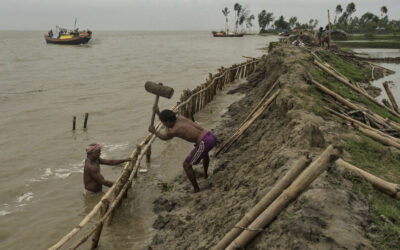
UN General Assembly Endorses the “Climate Obligations” Defined by the World’s Highest Court
In May 2026, the United Nations General Assembly (UNGA) adopted a landmark resolution endorsing the International Court of Justice’s (ICJ) advisory opinion on States’ obligations with respect to climate change. The resolution marks an important milestone in international climate governance by reaffirming that climate action is no longer merely a matter of political commitment or voluntary international cooperation, but is increasingly understood as a legal obligation under international law.

Turning Crisis into Opportunity for Hungarian Industry: Circularity and Bioeconomy
An annual reduction of 500 ktCO₂e in emissions and 1 TWh savings per year in final energy consumption could be achieved in Hungary if we respond to the oil price shock not merely as a crisis, but as an industrial structural turning point. According to our latest study, the bioeconomy, circularity, and green electrification are no longer just climate policy targets, but critical components of national economic self-defence.
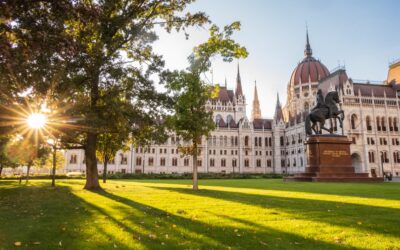
Possible energy and climate policies of the new Hungarian government
As the news of the results of the recent Hungarian parliamentary elections have made headlines around the world, many are wondering what to expect from the upcoming government under the TISZA party. Below a short summary explains what the new government may plan on energy and climate.
Climate Champion or Climate Challenge? – Hungary’s 2040 Climate Target, ETS2, the Social Climate Plan, and the National Building Renovation Plan
Hungary’s climate policy has reached a critical juncture: the 2040 targets, the ETS2, and the Social Climate Plan simultaneously offer rapid emissions reduction and carry significant social risks. The key question is: how can this ambitious target framework be achieved while keeping economic and social impacts manageable?

Lessons from the Iran conflict: Why the green energy transition is a matter of security and sovereignty?
The Iran conflict has once again demonstrated how vulnerable the fossil fuel–based global economy is. As tensions in the Middle East increased, energy prices immediately began to rise, as markets feared for the security of supply. The current crisis is therefore not only a geopolitical event, but also another reminder that energy security and the green energy transition are in fact two sides of the same strategic issue.
“What kind of world do we want to leave to those who come after us, to children who are now growing up? This question not only concerns the environment in isolation; the issue cannot be approached piecemeal. (…) Why are we here? What is the goal of our work and all our efforts? What need does the earth have of us? (…) Unless we struggle with these deeper issues” – says the Pope, “I do not believe that our concern for ecology will produce significant results.” Laudato Si’ Encyclical Letter
Central European Climate & Sustainability Think Tank
Analyses, Consulting, Green Solutions

Consulting
We help you make well-founded sustainability and climate policy decisions.

Analyses, research
Sustainability and climate policy analyses and research to lay the foundations for climate-neutral social and economic operation.

References
Get to know our work, projects and other previous activities so far.
Collaborations


Contact us!
If you have any questions about our research and consulting services, please, feel free to contact us!