
Looking back on the Green Policy Center’s year 2020
12.30.2020
Author: Tibor Schaffhauser

We at the Green Policy Center have imagined the year 2020 quite differently, just as all of us. Nonetheless we have achieved during our first year of operations quite a lot; we have published articles, started a series of studies, organised public events, participated on conferences and were active on our social media outlets. Below we have compiled an info-graphic about our first year.

We at the Green Policy Center are thankful that you have followed our work in 2020, participated at one of our events or worked with us on a sustainability project. Our think tank will continue to work on high quality level in 2021 as well to promote a meaningful dialogue on sustainability, climate policy and other environmental issues, in order to achieve the 2050 climate neutrality goal.

Related Articles


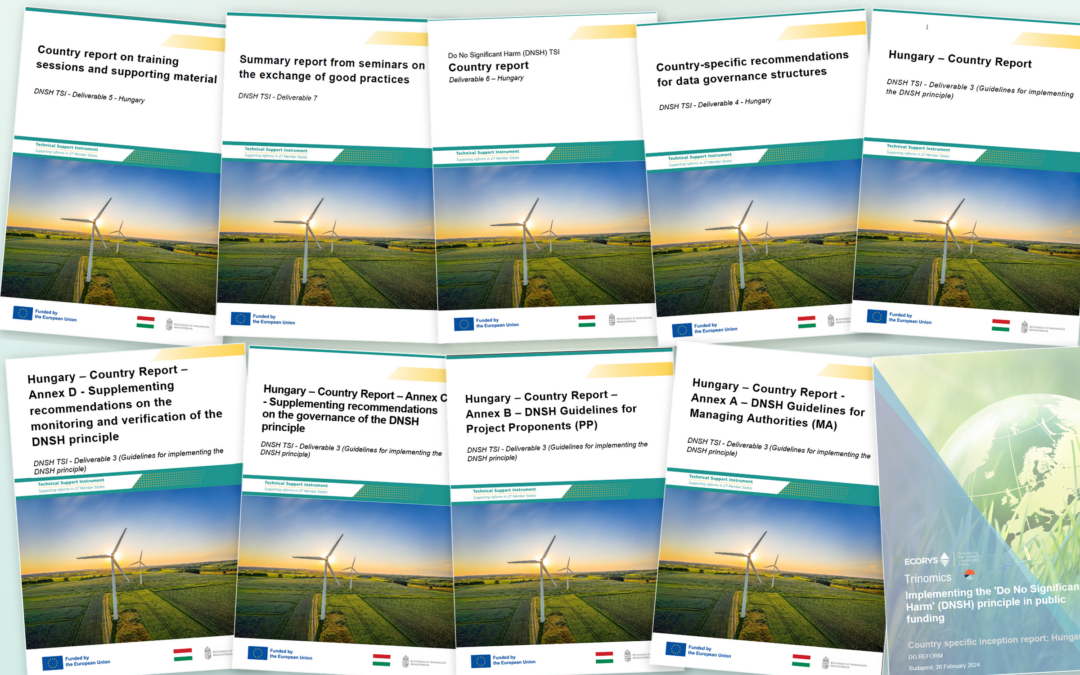
How can the DNSH principle contribute to more sustainable use of public funds?

How can the DNSH principle contribute to more sustainable use of public funds?

How can we ensure that investments implemented using EU and national funds do not cause significant environmental harm? A multi-year project involving eight European countries provided guidance to selected public authorities on how to implement this EU legal requirement. The Green Policy Center participated in the project as the Hungarian partner. During the recently concluded cooperation, we worked with Hungarian and international partners to strengthen the practical application of the DNSH principle in Hungary.

UN General Assembly Endorses the “Climate Obligations” Defined by the World’s Highest Court

UN General Assembly Endorses the “Climate Obligations” Defined by the World’s Highest Court

In May 2026, the United Nations General Assembly (UNGA) adopted a landmark resolution endorsing the International Court of Justice’s (ICJ) advisory opinion on States’ obligations with respect to climate change. The resolution marks an important milestone in international climate governance by reaffirming that climate action is no longer merely a matter of political commitment or voluntary international cooperation, but is increasingly understood as a legal obligation under international law.